The most common way to fix a Commercial Roof Leak Repair is to find the point of failure (usually ponding water, failed seams, broken flashing or compromised roof penetrations) and then make a localized repair (patch the membrane, reseal the seams, or replace the flashing). “A patch usually costs about $300, but bigger repairs to the membrane or drainage can cost thousands.” The problem is not usually in the repair, but rather in finding out where the water is coming from. Commercial roofs can leak several feet away from the actual stain on the ceiling, which doesn’t always tell the whole story. Here’s what causes most commercial roof leaks, how much repairs cost, and how to distinguish a real fix from a quick patch.
Why Commercial Roofs Leak More Than Residential Ones
Commercial Roof Leak Repair: Flat or low-slope roofing is common in commercial structures, such as TPO, EPDM, PVC, or modified bitumen roofing systems, as opposed to residential structures that often use sloped and shingled roofs. In the case of a low-slope roof, it’s important that the drainage and the state of the membrane are taken care of since there won’t be much work done by gravity.
Commercial roofs also have many more penetrations-HVAC units, exhaust vents, pipes, skylights, and roof-mounted equipment-and each is a potential leak point where the membrane meets a different material. More penetrations just mean more places that a seal can fail over time.
The Most Common Causes of Commercial Roof Leaks
Ponding water. The water that remains on the low-slope roof for over 48 hours after a rainstorm speeds up membrane degradation while putting additional strain on the roof deck due to its excessive weight. In most cases, the issue with ponding results from poor drainage or slope of the roof, which is why it leads to recurring leaks.
Seam failures. Membrane roofs are installed in sheets that are joined by heat-welded or adhesive seams. These seams represent the most vulnerable failure point on the entire roof, as this is where the membrane is thinnest and most subject to movement, UV exposure, and thermal expansion.
Damaged or aged flashing. The flashing creates watertight seals at the places where the roof membrane joins the walls, parapet, curbs, and any penetration. The metal flashing is bound to rust and deteriorate over time, while the sealing material used with the flashing will crack well before the roof membrane fails.
Leaks due to holes or damage. Maintenance workers walking around on the roof, fallen tools, storm damage, and hail will puncture or tear the roof membrane, especially on old or brittle roofs.
Drainage problems. Clogged or damaged drainage systems on a roof force water to seek other routes off the roof, usually around parapet walls or penetrations.
Age and material fatigue. Every roofing membrane has a realistic service life – typically 15 to 25 years depending on material and maintenance. Past that point, leaks become more frequent and widespread rather than isolated to one obvious cause.
How Commercial Roof Leak Repair Actually Works
Leak tracing first. For repairs to begin, the roof leak needs to be traced to its true source, because water may travel through the roof deck or insulation layers before leaking down into the ceiling from another location. Moisture testing techniques such as infrared or capacitance testing are frequently used on larger roofs.
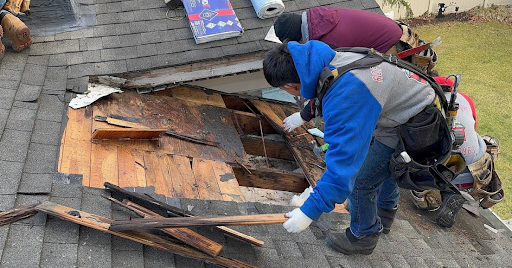
Spot repairs. For an isolated cause – a single puncture, a failed seam section, or damaged flashing – the fix is targeted: cutting out and patching the damaged membrane section, re-welding or re-sealing a seam, or replacing a section of flashing. This is the most common and most cost-effective type of repair when the roof is otherwise in reasonable condition.
Drainage correction. If ponding water is the root cause, the fix may involve clearing and enlarging drains, adding additional drains or scuppers, or installing tapered insulation to correct the slope so water actually reaches existing drains instead of collecting.
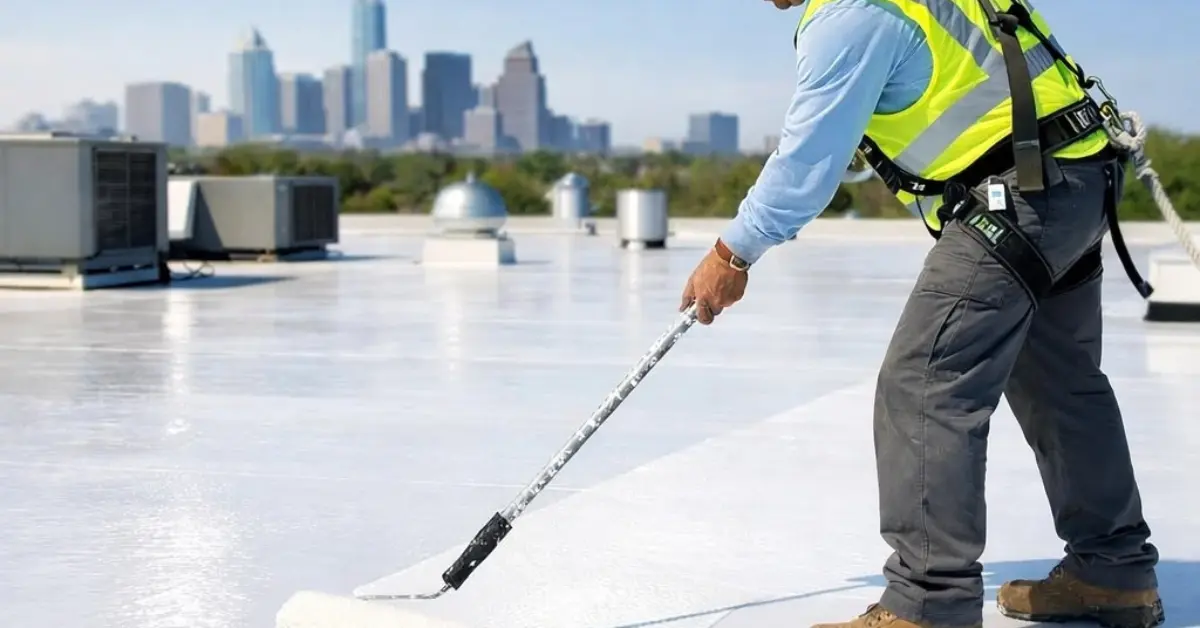
Coating or restoration. Where the roofing has general small signs of deterioration without any structural damage, the application of roof coating (elastomeric, silicone, and acrylic) can increase the life span of the membrane and repair any small leaks throughout the entire roof surface.
Full section or full roof replacement. When a roof has widespread membrane failure, extensive wet insulation, or has exceeded its service life, patch repairs stop being cost-effective and a larger replacement becomes the more economical long-term choice – a good roofer should tell you honestly when you’ve reached that point rather than continuing to sell patch repairs.
Roof Repair Cost: What to Actually Expect
Commercial Roof Leak Repair: Roof repair cost for commercial buildings varies significantly based on the type and extent of damage:
- Costs associated with roof repair for commercial buildings are highly variable depending on the nature of the damage:
- A small repair (single seam, hole, or flash repair) costs 300-1,500.
- Membrane sections or several repairs may cost 1,500-5,000, depending on the size and accessibility of the roof.
- Drainage repair (drain installation or installation of tapered insulation) may cost between 2,000- 10,000+, depending on the size of the job.
- Roof coating for the entire building is usually estimated per square foot (2-7 per square foot).
- Full roof replacement is priced by the square (100 sq ft) and varies widely by material and building size, generally running well into five or six figures for most commercial buildings.
The biggest cost variable isn’t usually the repair itself – it’s how long the leak went undetected. A leak caught early is a patch; a leak that’s been soaking insulation and deck material for months can turn into a much larger repair once the damage is fully assessed.
Signs of Roof Damage Worth Addressing Now
- Ceiling stains, bubbling paint, or musty odors on the top floor.
- Visible ponding water more than 48 hours after rain.
- Cracked, blistered, or lifted membrane sections.
- Rusted or separated flashing around vents, curbs, or parapet walls.
- Debris buildup around drains or scuppers.
- Soft or spongy spots when walking the roof, which often indicate wet insulation underneath.
Catching these signs during a routine inspection, rather than after a leak reaches the ceiling, is consistently the cheaper path – most commercial roofing contractors recommend at least two inspections a year, typically in spring and fall.
Why Choose NJ Roofing Services for Commercial Roof Leak Repair
Commercial Roof Leak Repair: Finding the actual source of a commercial roof leak takes experience with moisture tracing and membrane systems, not just patching the spot below the ceiling stain – a mismatched fix often means paying for the same leak twice. We at NJ Roofing Services provide residential roofing and flat roofing with practical expertise in diagnosing and fixing commercial low-slope roofs. This includes clear-cut advice on which solution is best suited for your unique situation – a simple repair, a coating, or a full replacement. If you want a repair that will fix your leak problem for good instead of just postponing it, then using the services of a contractor who can accurately locate your problem the first time around will save you money in the long run.